Commercial Property Valuation: Complete Guide for 2026

Commercial property valuation is a sophisticated process that determines the market value of business premises, investment properties, and development sites. Whether you're buying, selling, refinancing, or simply need to understand your property's worth for financial reporting, accurate commercial valuation is essential. This comprehensive guide explores everything property owners, investors, and lenders need to know about commercial property valuation in 2026.
Understanding Commercial Property Valuation
Commercial property valuation is the professional assessment of a property's market value by qualified chartered surveyors. Unlike residential valuations, commercial assessments require specialized knowledge of business property markets, investment yields, and rental values. The valuation process considers numerous factors including location, property condition, lease terms, tenant quality, and prevailing market conditions.
Professional valuations serve multiple purposes beyond simple buying and selling. They're essential for secured lending decisions, financial reporting requirements, taxation calculations, portfolio management, and dispute resolution. Major banks and financial institutions rely on accurate commercial valuations to make informed lending decisions and manage risk effectively.
The commercial property market operates differently from residential markets, with values heavily influenced by investment yields, rental income potential, and economic forecasts. Understanding these unique characteristics is crucial for anyone involved in commercial real estate transactions or property management.
Key Valuation Methods Used by Professional Surveyors
The Comparative Method
The comparative method represents the most widely used approach for valuing standard commercial properties. This technique involves analyzing recent sales of similar properties in comparable locations, then adjusting for differences in size, condition, specification, and lease terms. RICS chartered surveyors maintain extensive databases of comparable transactions, enabling them to provide accurate market value assessments.
Successful application of the comparative method requires deep local market knowledge and access to reliable transaction data. Surveyors must carefully adjust comparable evidence to reflect differences between properties, considering factors such as property age, building quality, accessibility, parking provision, and local amenities. The method works best in active markets where sufficient comparable evidence exists.
The Investment Method
For income-producing commercial properties, the investment method provides the most appropriate valuation approach. This technique calculates property value by capitalizing the rental income stream using appropriate yields. The surveyor analyzes current rental income, assesses rental growth prospects, considers lease terms and tenant covenants, then applies a suitable capitalization rate reflecting investment market conditions.
Investment yields vary significantly across property sectors and locations. Prime office buildings in central London might trade on yields around four to five percent, while secondary retail properties in regional towns could show yields of eight to ten percent or higher. Understanding these yield differentials requires extensive market knowledge and careful analysis of investment transactions.
The investment method also considers void periods, refurbishment costs, and management expenses. Professional valuers factor in these holding costs when calculating net present values, ensuring their assessments reflect real-world investment performance rather than theoretical returns.
The Residual Method
Development sites and properties with redevelopment potential require specialist valuation using the residual method. This approach calculates land value by estimating the completed development value, then deducting all development costs including construction expenses, professional fees, finance costs, marketing expenses, and developer's profit.
Residual valuations involve significant complexity and require expertise in development appraisal. Surveyors must make informed assumptions about planning permission prospects, construction costs, development timescales, and market conditions upon completion. Small changes in these assumptions can dramatically affect calculated land values, making professional expertise essential.
The Profits Method
Specialist commercial properties such as hotels, restaurants, cinemas, and leisure facilities often require valuation using the profits method. This approach assesses the property's ability to generate profits for a reasonably efficient operator, then capitalizes those profits to determine property value.
The profits method requires detailed analysis of trading accounts, industry benchmarks, and operational costs. Surveyors must understand the specific business sector, assess management efficiency, consider competition, and evaluate market trends affecting profitability. This specialized knowledge explains why commercial valuation surveyors often develop sector-specific expertise.

Critical Factors Affecting Commercial Property Value
Location and Accessibility
Location remains the primary driver of commercial property value. Properties in prime business districts command premium values reflecting strong tenant demand, limited supply, and prestige addresses. Accessibility via major transport routes, proximity to customers and workforce, and availability of supporting services all significantly impact value.
Commercial locations follow established hierarchies. Retail properties depend heavily on footfall and visibility, making high street positions particularly valuable. Office locations increasingly prioritize transport connectivity and local amenities as employees demand better workplace environments. Industrial properties require excellent logistics connections, with proximity to motorways and ports commanding premium values.
Emerging location trends continue reshaping commercial property values. The rise of flexible working has reduced demand for some traditional office locations while increasing interest in suburban business parks offering better work-life balance. Understanding these evolving patterns requires ongoing market research and local expertise.
Property Condition and Specification
Building quality significantly influences commercial property values. Modern, well-specified properties with efficient layouts, good natural light, adequate parking, and contemporary facilities achieve higher values and rental levels than older, poorly configured buildings. Energy efficiency has become increasingly important, with properties offering strong environmental credentials commanding premium values.
Deferred maintenance and obsolescence substantially reduce property values. Buildings requiring significant refurbishment or modernization suffer value discounts reflecting both the direct cost of improvements and the disruption caused during works. Professional valuers carefully assess building condition, identifying both obvious defects and hidden issues affecting value.
Lease Terms and Tenant Quality
For investment properties, lease terms fundamentally affect value. Long leases with strong upward-only rent reviews provide secure income streams valued highly by investors. Conversely, properties with short lease expiries or break clauses carry greater risk, reflected in higher investment yields and lower capital values.
Tenant covenant strength represents another crucial value factor. Properties leased to financially strong tenants with excellent credit ratings achieve lower investment yields and higher values than those occupied by struggling businesses. Professional valuers analyze tenant accounts, assess business sustainability, and consider sector-specific risks when evaluating covenant strength.
Lease structures continue evolving in response to market conditions. The traditional institutional lease with twenty-five year terms and upward-only reviews has given way to more flexible arrangements. Modern leases often include break clauses, turnover rents, and service charge caps, all affecting investment value and requiring careful analysis during valuation.
The Commercial Property Valuation Process
Initial Instruction and Terms of Engagement
Professional valuations begin with clear terms of engagement defining the valuation purpose, basis of value, inspection extent, and reporting requirements. RICS standards mandate this clarity to ensure all parties understand what the valuation will deliver. Different valuation purposes require different approaches, with secured lending valuations typically more conservative than market value assessments for acquisition.
Surveyors must identify potential conflicts of interest, ensure appropriate competence, and arrange suitable professional indemnity insurance. These professional requirements protect clients and maintain valuation standards across the industry. Reputable firms refuse instructions where conflicts exist or expertise proves insufficient.
Property Inspection and Analysis
Thorough property inspection forms the foundation of accurate valuation. Chartered surveyors examine building exteriors and interiors, assess condition and specification, measure floor areas, evaluate layout efficiency, and identify any factors affecting value. Modern technology including drones and laser measurement devices enhances inspection accuracy while reducing time requirements.
Experienced surveyors look beyond obvious features to identify subtle value drivers. They assess natural light quality, ceiling heights, floor loading capacities, service provision, and expansion potential. For industrial properties, they evaluate yard space, loading bay configurations, and power supplies. Retail valuations consider shop frontage, window displays, and customer flow patterns.
Market Research and Analysis
Following inspection, surveyors conduct extensive market research gathering comparable evidence, analyzing recent transactions, reviewing rental levels, and assessing yield trends. This research draws on professional databases, local contacts, published reports, and market intelligence gathered through networking within the property profession.
Market analysis extends beyond simple data collection to interpretation of trends and forecasting. Valuers consider economic conditions, sector-specific challenges, planning developments, infrastructure improvements, and demographic changes. This broader perspective ensures valuations reflect not just current conditions but also reasonably foreseeable changes affecting value.
Valuation Calculation and Report Preparation
Armed with inspection findings and market research, surveyors calculate property values using appropriate methodologies. Complex properties may require multiple approaches, with final values representing weighted judgments balancing different techniques. Professional experience and market knowledge inform these judgments, explaining why valuation remains as much art as science.
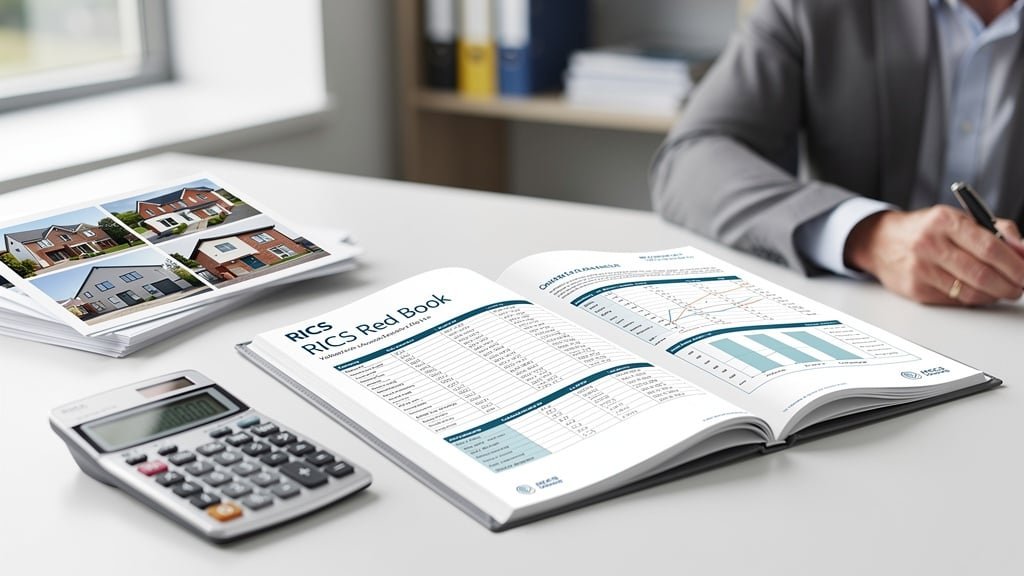
Valuation reports present conclusions clearly while explaining methodology, assumptions, and market context. RICS Red Book valuations follow prescribed formats ensuring consistency and completeness. Reports highlight any matters affecting value, unusual features requiring consideration, and limitations or special assumptions underlying the valuation figure.

When You Need Professional Commercial Valuations
Property Purchase or Sale
Buyers and sellers both benefit from professional valuations before completing commercial property transactions. Buyers gain confidence their proposed purchase price reflects true market value, while sellers can demonstrate value expectations rest on sound professional advice rather than optimistic speculation. Independent valuations facilitate negotiations and reduce transaction risk.
Refinancing and Secured Lending
Banks and other lenders require independent RICS Red Book valuations before advancing funds secured on commercial property. These valuations help lenders assess security adequacy, determine appropriate loan-to-value ratios, and manage lending risk. Properties must typically maintain values exceeding loan amounts by comfortable margins, with valuations reviewed periodically throughout loan terms.
Financial Reporting and Accounts
Companies holding commercial property must obtain regular valuations for financial reporting purposes. Accounting standards require properties to be shown at fair value in balance sheets, necessitating professional valuations at regular intervals. These valuations affect reported profits, shareholder dividends, and company valuations, making accuracy essential.
Taxation Matters
Various tax obligations require professional property valuations. Capital gains tax calculations depend on accurate valuations at both acquisition and disposal. Inheritance tax assessments require death valuation of property assets. Stamp duty land tax may require valuations where non-monetary consideration complicates transaction values. HMRC expects valuations to follow professional standards and may challenge figures lacking proper support.
Dispute Resolution and Expert Witness
Property disputes frequently require expert valuation evidence. Rent review disagreements, lease renewal negotiations, compulsory purchase compensation, partnership dissolutions, and divorce settlements all need independent professional valuations. Chartered surveyors acting as expert witnesses must provide impartial opinions supporting proper dispute resolution.
Choosing the Right Commercial Valuation Surveyor
Selecting appropriate professional help significantly impacts valuation quality and usefulness. RICS chartered surveyors offer recognized qualifications, professional standards, and regulatory oversight. However, not all chartered surveyors possess equal expertise across all property sectors and locations. Buyers should seek surveyors with demonstrable experience valuing similar properties in relevant locations.
Professional indemnity insurance provides essential protection should valuations prove negligent. Reputable firms maintain substantial cover reflecting the high values involved in commercial property. Clients should verify insurance adequacy before instructing valuers, particularly for high-value properties where potential losses could be significant.
Local market knowledge distinguishes good valuers from merely competent ones. Commercial property markets remain intensely local, with value drivers varying significantly between locations. Surveyors operating in specific areas develop relationships with local agents, understand planning constraints, recognize emerging trends, and access better comparable evidence than distant generalists.
Current Commercial Property Market Trends
The commercial property market continues evolving in response to economic conditions, technological change, and shifting occupier requirements. Office markets face ongoing challenges from flexible working, with many businesses reducing space requirements or seeking better-quality buildings. This polarization between prime and secondary stock affects values across the sector.
Industrial and logistics properties have experienced strong value growth driven by e-commerce expansion. Modern warehouses with good transport links command premium values, while older, poorly located units struggle to attract tenants. This sector demonstrates how economic shifts rapidly affect property values.
Retail property faces continued pressure from online shopping, changing consumer behavior, and oversupply in some locations. Values have fallen significantly for secondary retail units, while prime high street locations and successful shopping centers maintain relative stability. Understanding these diverging trends requires careful market analysis.
Environmental considerations increasingly influence commercial property values. Buildings offering strong energy efficiency, low carbon emissions, and sustainable features command premium values and achieve better rental levels. This trend will strengthen as regulatory requirements tighten and occupier demands evolve.
Conclusion
Commercial property valuation combines technical expertise, market knowledge, and professional judgment to determine accurate property values. Understanding valuation methods, value drivers, and when professional input proves essential helps property owners, investors, and occupiers make informed decisions.
As commercial property markets continue evolving, professional valuation expertise becomes ever more valuable. Working with experienced RICS chartered surveyors ensures access to current market intelligence, appropriate methodology, and robust professional standards protecting all stakeholders. Learn more about our full range of professional commercial valuation services.
Need Professional Commercial Valuation?
Our team of RICS chartered surveyors provides expert commercial property valuation services across the UK. Contact us today for a free consultation.
Get Your Free Quote